01Foundations & Treatment Planning
“Build the diagnostic eye before touching a drill”
Overview
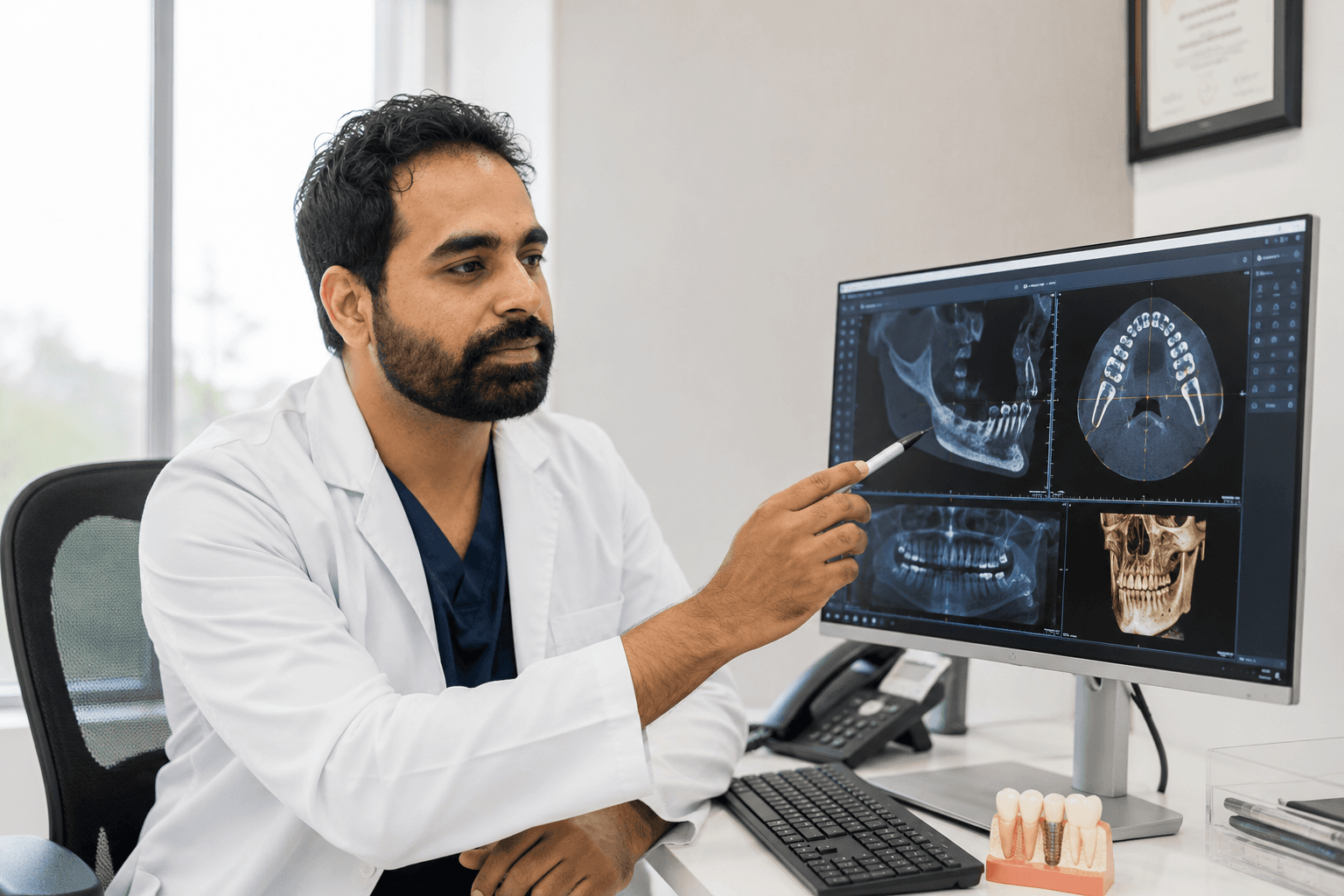
Before you ever pick up a drill, you need to read a patient like a book. Module 1 builds the diagnostic foundation that separates a confident implantologist from someone guessing. You will spend five intensive days mastering CBCT interpretation, bone density classification, and full-arch treatment planning — so that when you enter the surgical suite, every decision is already made.
Learning Outcome
“Can independently read a CBCT, select a suitable patient, and plan a case before entering the surgical suite.”
Most implant failures happen because of poor planning, not poor surgery. This module exists so that never happens to your patients.
What You Will Be Able To Do
- Read and interpret CBCT scans independently across axial, sagittal, and panoramic reformats
- Classify bone density (D1–D4) and select the corresponding osteotomy preparation sequence
- Identify anatomical risk structures: inferior alveolar nerve canal, mental loop, incisive canal, and maxillary sinus floor
- Plan single tooth, multiple unit, and full-arch cases using prosthetic-driven virtual planning software
- Perform model surgery on customized resin jaws and rehearse osteotomy drill protocols
Day-by-Day Schedule
Day 1
Implant Biology & Osseointegration
Day 2
Patient Selection, Medical History & Contraindications
Day 3
CBCT Interpretation & Bone Density Classification
Day 4
Treatment Planning — Single, Multiple & Full Arch
Day 5
Hands-On: CBCT Planning + Model Surgery (Osteotomy Drills)
Clinical Focus Areas
In-Depth Technical Competencies
Prosthetic-Driven Virtual Implant Planning
Modern implantology requires reverse planning: starting with the definitive tooth position and emergence profile, then determining the 3D implant fixture location. Trainees evaluate bone availability, soft-tissue biotype, occlusal loading angles, and inter-arch clearance before finalizing osteotomy coordinates.
Misch Density Classification & Hounsfield Units
Differentiating D1 (>1250 HU), D2 (850–1250 HU), D3 (350–850 HU), and D4 (<150–350 HU) bone dictates whether surgical sites require bone tapping, cortical countersinking, or osteotome condensation to achieve the mandatory 30–45 Ncm primary insertion torque.
Medical Risk Stratification & Surgical Contraindications
Comprehensive screening covers absolute contraindications (recent myocardial infarction, intravenous bisphosphonates, active radiotherapy to the jaws) and relative risks (HbA1c >7.5%, smoking, uncontrolled periodontitis, osteoporosis) with proven prophylactic management protocols.
Surgical & Diagnostic Kit
Clinical Armamentarium Used
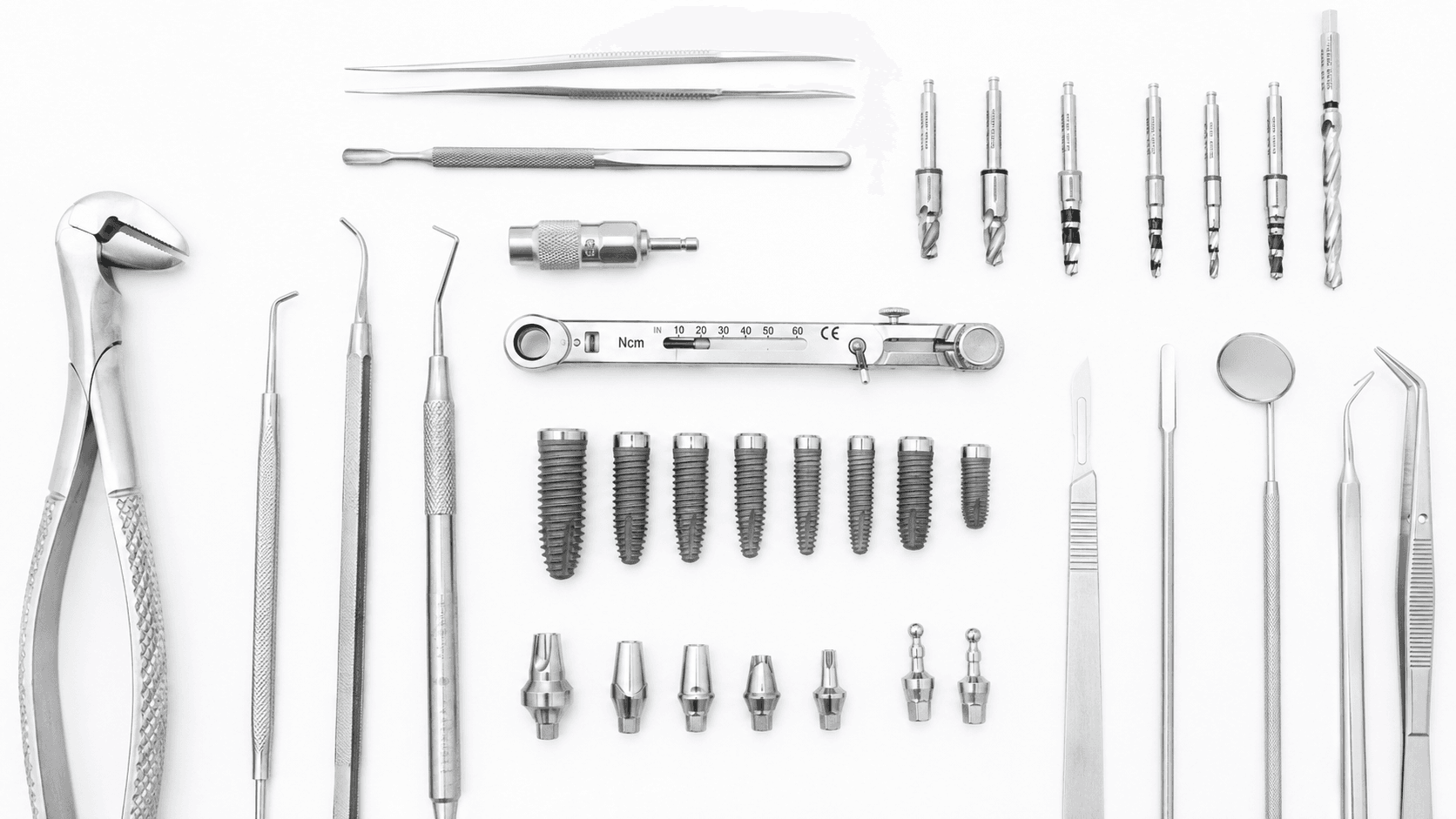
Every resident personally handles full hospital-grade instrumentation during this module, moving beyond observation into tactile mastery:
- High-resolution 3D CBCT imaging software (Planmeca Romexis / Carestream)
- Digital panoramic reconstruction and cross-sectional measurement tools
- Surgical diagnostic casts, diagnostic wax-ups, and radiographic vacuum-formed guides
- Anatomical mandibular and maxillary model jaw osteotomy simulation blocks
- Calibrated surgical calipers, depth gauges, and pilot osteotomy drills (2.0mm)
Only 10 Seats.
Is yours one of them?
Live Surgery from Day 1. NABH-accredited facility. Real patients, not mannequins.
Global Dental Education · Visakhapatnam, India