Updated 7 November 2026 — law changed on 19 March 2026. The Dentists Act, 1948 was repealed and the Dental Council of India dissolved on that date under S.O. 1445(E) and section 58(1) of the National Dental Commission Act, 2023. S.O. 1446(E) commenced specified provisions that day, including sections 31, 58(1)–(4) and (6), and 59; it was not a notification commencing every provision of the Act. The Health Ministry’s 20 March 2026 release confirms the transition.
The section 31(1) proviso deems eligible existing Indian Dental Register registrants registered under the new Act, within its stated conditions. Section 58(6) continues orders, licences and registrations in force at commencement until their expiry, within its terms. Section 59(2) continues the old Act’s educational standards, requirements and other provisions, and its rules and regulations, until replacement standards or requirements are specified under the new framework. Repeal does not make every old rule void; equally, this guide does not treat the whole 1948 Act as unchanged current law. The precise application of these transitional provisions to individual title and scope questions needs qualified legal and council advice.
Can a BDS doctor place implants in India? A BDS degree or short course alone does not establish blanket legal permission. Scope must be assessed against current recognised qualifications and curriculum, adequate competence and training, and applicable council requirements. NDC advisory M-1030 (2026) requires practice strictly within the prescribed domain of the practitioner’s specific qualification. Whether particular implant procedures fall within the current BDS curriculum has not been verified for this guide.
Why should a BDS graduate check scope before implant training?
For a BDS graduate considering implant training, the important questions are which procedures fall within the current qualification domain, what competence and supervision are needed, and when referral is appropriate. Course marketing and peer anecdotes do not determine the legal answer.
Separate professional opinion, training experience and current legal authority. The NDC replaced the DCI framework in March 2026. This guide sets out primary-source limits, not a legal clearance to start implant surgery.
Does a BDS registration alone establish permission for implant surgery?
No blanket permission is established here. NDC advisory M-1030 ties professional practice to the prescribed domain of the practitioner’s specific qualification, as defined by the current BDS/MDS syllabi and curriculum. Registration, qualification-domain requirements, adequate competence and training, and applicable council rules must be assessed together. An absence-of-ban argument is not proof of permission.
NDC Act section 32 addresses registered practice, while sections 31(1) and 58(6) protect existing registrations within statutory terms, including expiry. Those provisions do not themselves establish that every implant procedure is within every BDS dentist’s scope. Obtain curriculum-specific and council confirmation before deciding which procedures you may undertake.
How do qualification, competence and the 2014 ethics text fit together?
The former DCI’s 2014 ethics text must be read with NDC Act section 59(2), applicable replacements and the current qualification-domain advisory. Training and competence are not the only conditions: clause 8.3.3 also requires adequate qualification. This guide does not resolve all transitional legal questions or verify the curriculum scope of individual implant procedures. Primary ethics text.
"A Dental Surgeon should ordinarily be able to deal with all common diseases of the Oral cavity by virtue of his qualification and training. However, if the patient requires expert care of a specialist, appropriate references to Dental or Medical specialists may be made according to the nature of the problem." (Clause 5.1.1)
The 2014 clause 4.1.2 also addresses referral when a case falls outside the dentist’s expertise. These referral provisions are not a substitute for verifying lawful scope. See the full primary text; read it with the transition note above.
2014 clause 8.3.3: “A Dental Surgeon shall not claim to be a specialist either through displayed signs on the name board and / or the office stationary (visiting cards, letterheads, etc.,) unless he has a special qualification (which is recognized by the Council) in that Specialty. A Dental Surgeon can however practice all branches of Dentistry provided he shows adequate qualification, competence and bona fide training in the concerned branch or branches.”
NDC M-1030 requires practice strictly within the prescribed domain of the specific qualification. A successful procedure does not prove legal scope, and a course certificate does not by itself prove competence or provide a legal defence. Seek council and qualified legal advice where the curriculum or procedure scope is unclear.
Where Do Private "Certificate" and "Fellowship" Courses Stand?
Before choosing a private implant course, check what the award actually is, who issues it and whether any claimed recognition is verified. Attendance, documented training, a recognised qualification and permission for independent clinical practice are different things.
- Check each award’s recognition: the 2014 clause 3.4.2 sets conditions for degrees and other qualifying certificates, diplomas, memberships, honours and fellowships displayed as suffixes. A private course is not automatically a registrable specialty qualification. Verify the specific award with the relevant council.
- Keep honest training records: attendance certificates, logbooks and mentor assessments can document learning. They do not by themselves establish lawful scope, adequate competence or immunity from liability.
- Assess the qualification domain first: NDC M-1030 links practice to the current curriculum of the specific qualification. A short course cannot simply be assumed to expand it.
Considering supervised training? Ask GDE about course structure and supervision on WhatsApp 70134 39499. Course advice is not council clearance for independent practice.
What should you check before choosing an implant course?
Compare the actual curriculum, supervision arrangements and assessment, rather than assuming that a course duration or certificate establishes readiness. Ask who assesses your work and how cases are selected. Keep the legal qualification-domain question separate from training quality: a supervised learning opportunity is not automatic permission for independent implant surgery.
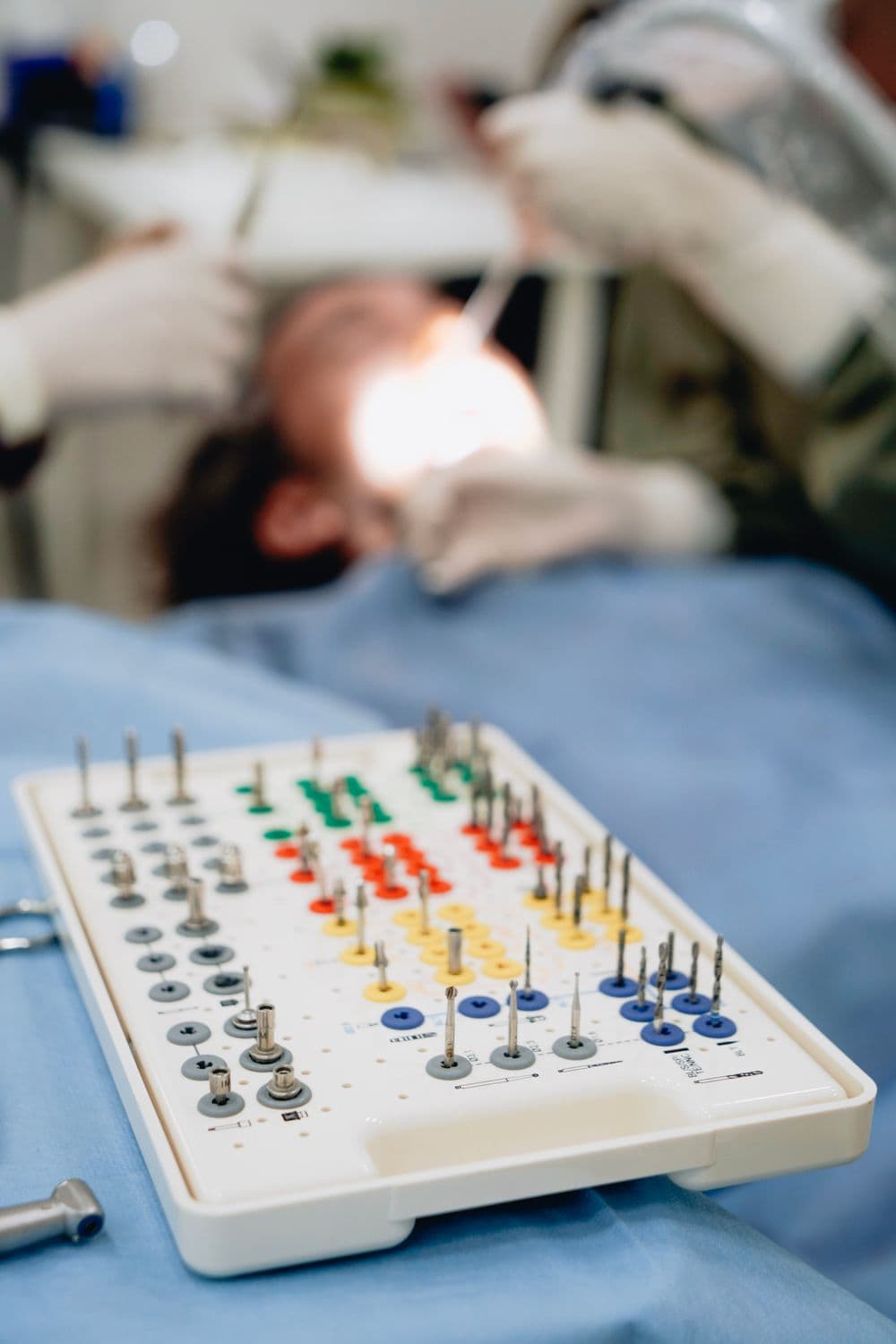
Simulation and clinical experience are different learning settings. This guide does not claim that all model-based courses fail, invent a typical fee range, or promise that a particular course removes surgical risk. Ask the provider for a written programme and clear supervision arrangements rather than relying on promotional success claims.
Discuss GDE training: WhatsApp 70134 39499 for programme details. Confirm professional scope separately with your State Dental Council.
Which patient-specific decisions need assessment rather than starter rules?
Clinical planning is patient-specific, not a list of universally safe sites or numerical readiness targets. The SDCEP guidance on peri-implant disease risk and EFP S3 guideline support assessment, risk-factor management and continuing care. These clinical sources do not establish Indian legal scope or provide a surgical protocol for a beginner.
- Periodontal assessment: SDCEP calls for a periodontal examination during implant treatment planning so that existing disease can be identified and addressed. This is a planning requirement to discuss with the treating clinician, not a shortcut to deciding that any particular site is suitable.
- Individual risk profile: discuss oral hygiene, smoking and systemic disease such as diabetes with the treating team. SDCEP recommends addressing modifiable risks and stabilising periodontal disease around retained teeth before placement in patients with periodontitis. Its key recommendation is strong, but the supporting evidence is rated low certainty.
- Complexity and referral: SDCEP notes that bone loss can complicate surgery and that some cases warrant referral to a practitioner or team with enhanced or specialist skills. Do not infer from a tooth location, course certificate or completed case count that referral is unnecessary.
- Continuing care: discuss the need for ongoing periodontal and implant maintenance before treatment. SDCEP and the EFP guideline emphasise continuing supportive care and monitoring; placing an implant is not the end of the care plan.
- No generic operating thresholds: this article does not prescribe imaging for every patient, insertion torque, anatomical safety margins, grafting cut-offs or a minimum case count before anterior surgery. Those earlier numerical starter rules have been removed rather than preserved as a universal protocol.
These are nonprocedural decision points for discussion with an appropriately qualified treating team. Whether a particular procedure is within your recognised qualification and current curriculum domain still needs confirmation; clinical guidance cannot substitute for that legal and professional check.
What training options does GDE offer in Visakhapatnam?
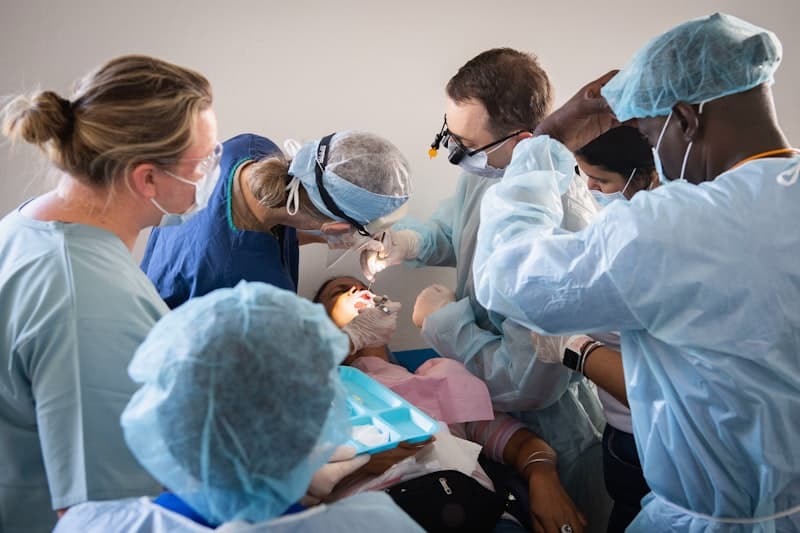
GDE offers 5-day Basic and Advanced programmes, a 6-day Fellowship and a 3-month residential programme, with a maximum of 10 participants per batch. Training includes real patients and 1-to-1 supervision with Dr. Saikrishna. The 3-month residential programme includes 15–20 supervised placements; lifetime mentorship is available.
These are programme features, not proof of a recognised specialty qualification or a universal readiness threshold. A supervised placement count is not a rule about when a dentist may work independently. Ask about the actual supervision and assessment arrangements and confirm your own professional scope before undertaking treatment.
What is the next step if your scope or training needs are unclear?
First separate the questions: council and curriculum confirmation for professional scope, individual clinical assessment for patient care, and provider information for training. A course enrolment decision cannot settle all three. Where scope remains unclear, seek council and qualified legal advice rather than relying on this article as permission to operate.
Review GDE courses and upcoming batches, or WhatsApp 70134 39499 for training information. No course completion guarantee of independent competence or legal clearance is made.
Which primary sources support this update?
The Gazette notifications establish the repeal and specified commencement dates; the Act supplies the registration and transition provisions. The parliamentary answer is historical evidence, while the two 2026 NDC notices address prescriptions and qualification-based practice. These sources do not, by themselves, settle every current title or implant-scope question.
- National Dental Commission Act, 2023 — sections 26, 31, 32, 58 and 59
- S.O. 1445(E), 19 March 2026 — appointed date under section 58(1)
- S.O. 1446(E), 19 March 2026 — specified provisions commenced
- PIB, 20 March 2026 — repeal and dissolution confirmation
- Lok Sabha Unstarred Question 797, 14 December 2018 — historical Dr-prefix answer
- NDC/EDRB M-2749, 23 October 2026 — mandatory prescription particulars
- NDC/EDRB M-1030, June 2026 — qualification/curriculum domain advisory
- Revised Dentists (Code of Ethics) Regulations, 2014 — former DCI text; read with section 59(2) and applicable replacements
Which clinical guidance supports the planning discussion?
SDCEP: Managing peri-implant disease risk supports the assessment, modifiable-risk, referral and continuing-care discussion. It describes its key recommendation as strong with low-certainty evidence. The EFP S3 guideline on prevention and treatment of peri-implant diseases (2023) provides the broader clinical guideline. Neither source establishes Indian professional scope.
Educational information, not individual legal or clinical advice. Confirm current title and clinical-scope requirements with your State Dental Council and a qualified adviser before acting.