Every implant course markets itself as "hands-on." Almost none of them define what that word actually means — and the gap between the two definitions is exactly where a lot of dentists get shortchanged.
The Hands-On Training Gap Nobody Talks About
In most short-format implant courses, "hands-on" means placing implants into a plastic or resin jaw model, then watching a faculty member operate on a real patient from a few feet away. You leave with muscle memory for a model that doesn't bleed, doesn't have variable bone density, and doesn't have a sinus membrane three millimetres from your drill tip.
That's not a criticism of any one institute by name — it's simply the format most short courses are built around, because supervising a room full of dentists operating on real patients is logistically harder and more expensive to run than a model workshop. The course still gets marketed as "hands-on," and technically it is. It's just hands-on with a model, not a patient.
Model-Only Workshops vs Supervised Live-Patient Training
| What you're evaluating | Model-only workshop | Supervised live-patient training |
|---|---|---|
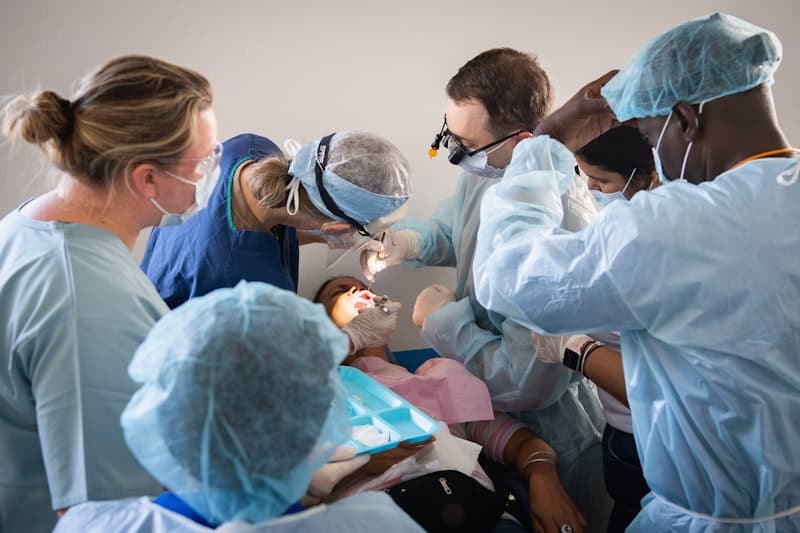
| What you actually place implants into | Plastic/resin jaw model | Real patients, under direct faculty supervision |
| Bone density and anatomy variation | Fixed, identical for every trainee | Different every case — exactly what you'll face solo later |
| Bleeding, soft tissue handling, real complications | Not present | Present, managed with a mentor beside you |
| What happens after the course | Your first real implant is on your own patient, solo | You've already placed real implants with a mentor correcting you in real time |
Why This Gap Matters the First Time You Place an Implant Alone
A model doesn't correct you. If your angulation is off by a few degrees on a resin block, nothing happens — you unscrew the implant and try again. On a real patient, that same few degrees can mean impinging the mandibular canal or perforating the maxillary sinus. The dentist who has only ever felt "correct" resistance in a plastic block has no reference point for what correct — or incorrect — feels like in living bone.
This is also why osseointegration and bone grafting are usually taught as slides in a model-only course, but are lived experience in a live-patient one — you see the biology respond to what your hands actually did, case after case.
What Live-Patient Training Actually Looks Like at GDE
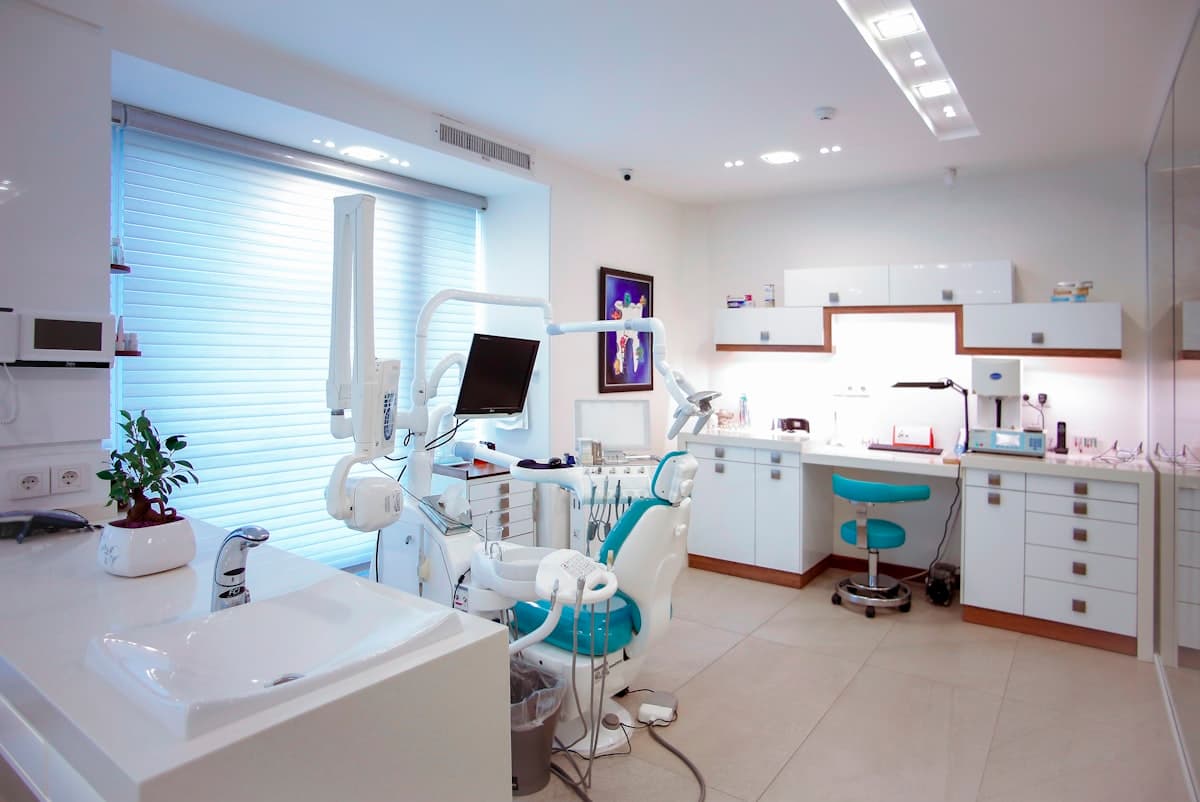
Global Dental Education runs training inside Malatamba Dental Hospital & Research Institute, a NABH-accredited hospital in Visakhapatnam — not a rented conference hall with a model kit. A few structural choices follow directly from that:
- Live patients from Day 1 — not a model-first, patient-later structure.
- Batches capped at a maximum of 10 dentists — so faculty supervision is per-trainee, not per-room.
- Lifetime mentorship after the course ends, not just a completion certificate.
- Programs run from 5-day foundation courses (Basic Implant Dentistry) up to a 3-month Implant Program where dentists place 15–20 implants on real patients before finishing.
None of this is a claim that this is the "best" course in India — that's a judgment every dentist has to make for their own situation. It's a description of what the format is, so you can compare it against whatever else you're considering.
5 Questions to Ask Any Implant Course Before You Pay
Whether you train with us or somewhere else, these five questions will tell you more than any brochure will:
- "Will I place implants into a live patient myself, or a model?" — ask this directly. "Hands-on" is not a real answer.
- "What's the maximum batch size per faculty member?" — supervision quality collapses past a certain trainee-to-mentor ratio.
- "Is the training inside an actual hospital, or a rented training hall?" — this determines whether real complications (bleeding, infection, anatomy variation) are even part of what you'll see.
- "What happens after the course ends if I have a question on my first solo case?" — a one-time certificate and a mentor you can still call are very different outcomes.
- "How many real implants will I personally place during the course, not observe?" — get a number, not a description.
Where This Leaves You
If you've already been through a model-only course and felt underprepared for your first real case, you're not imagining the gap — it's a structural difference in course design, not a personal shortcoming. If you're choosing your first implant course, use the five questions above on every institute you're considering, including us. See our full guide to choosing an implant dentistry course in India for the complete comparison checklist, and Dr. Saikrishna's own account of why he teaches this way.
Know a dentist who's currently comparing implant courses? Share this on WhatsApp, or message us directly to ask about batch dates.